
IMPACT Project comes into the classroom: teacher training on climate change and migration
As part of the Erasmus+ IMPACT project, teachers Silvia Torresi and Arianna Smorlesi shared a range of practical activities and teaching methodologies developed by the project's international partners with the teaching staff of our Institute. The aim was to raise awareness among students about the connection between climate change and migration.
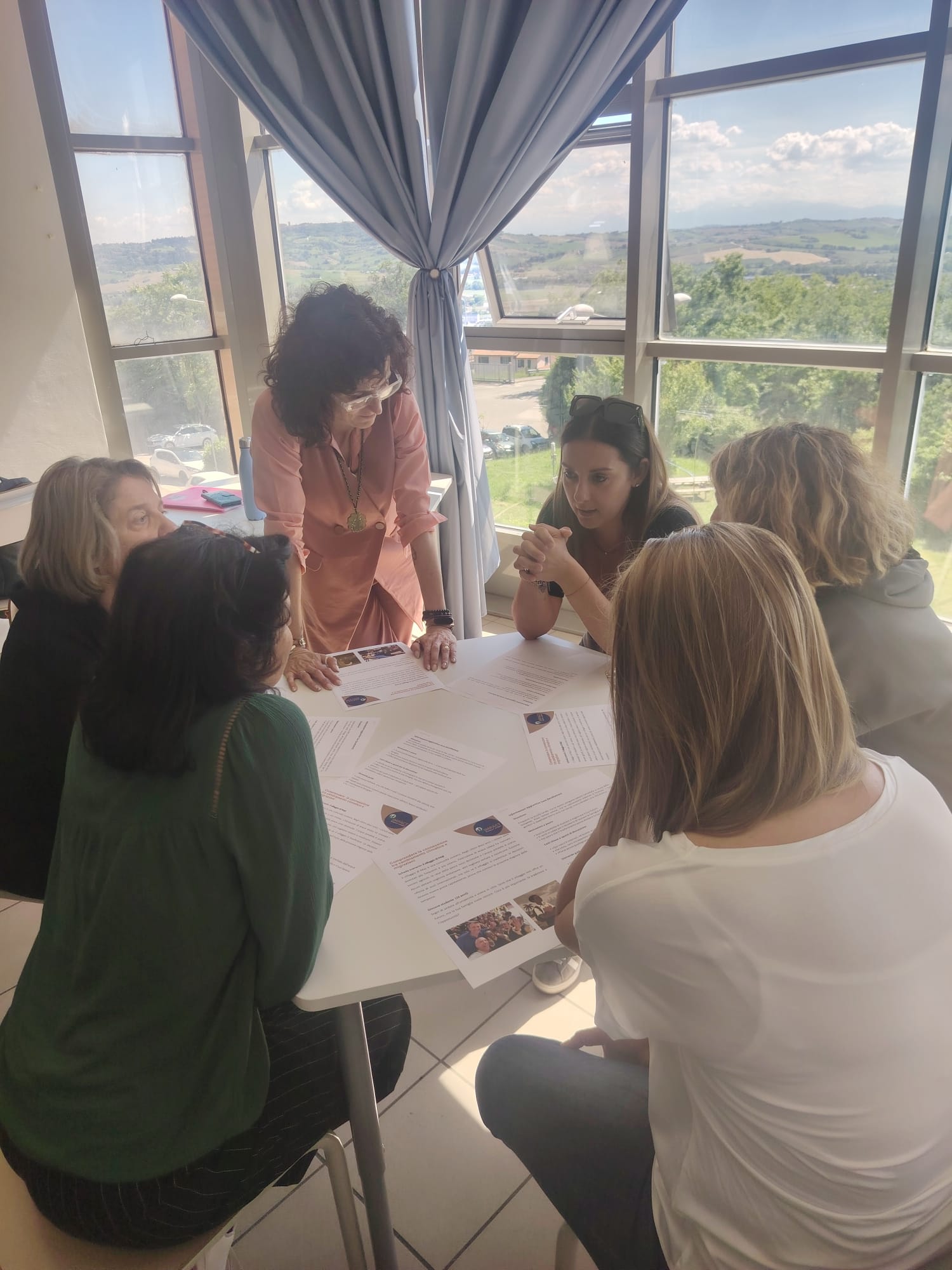
The workshop took place on 20 May in the Meucci Library and provided an important opportunity for professional development and exchange. It offered innovative tools for addressing in the classroom one of the most complex and pressing challenges of our time: understanding how environmental changes affect people's lives and contribute to migration processes.
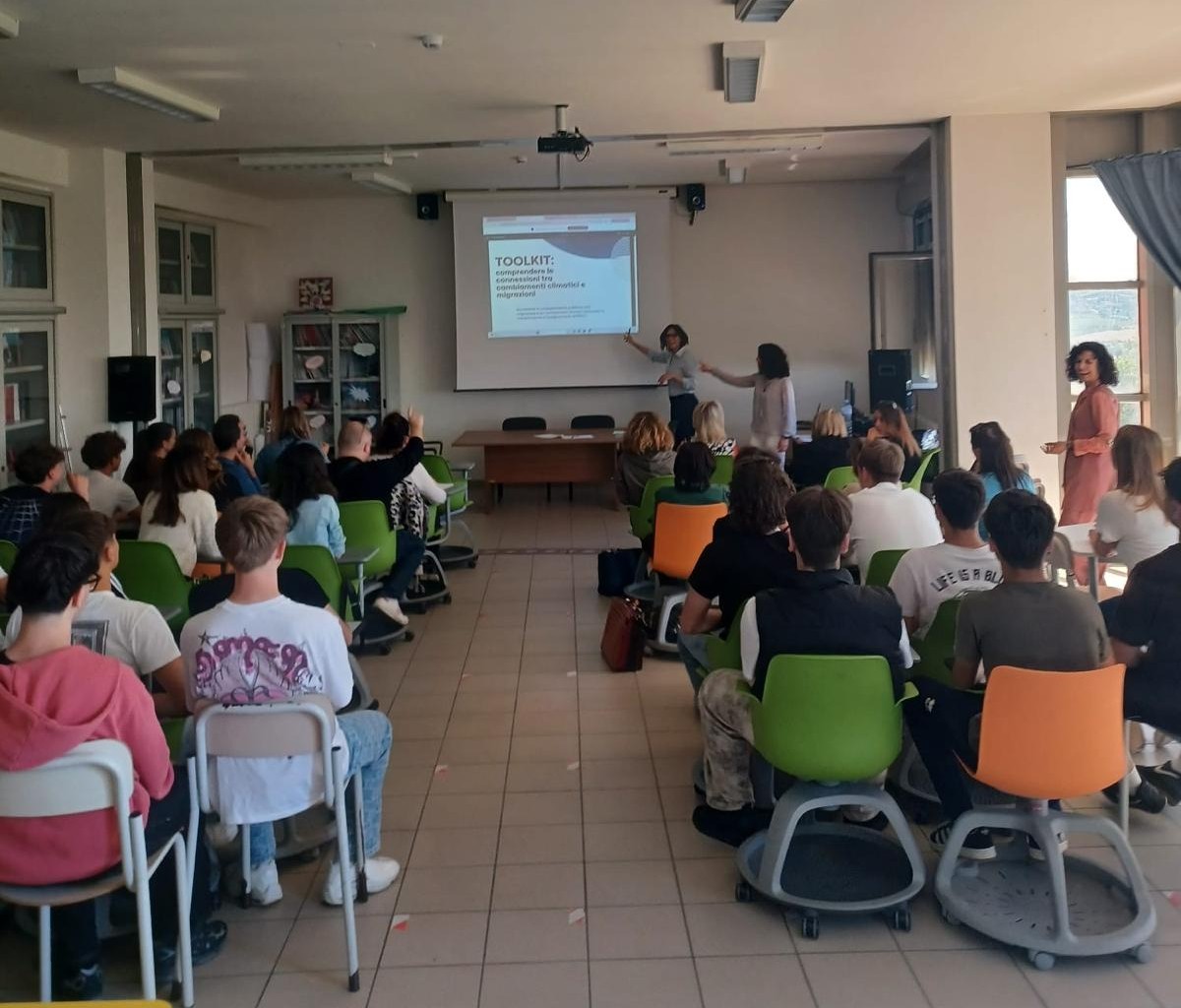
The session began with a brief presentation of the project, its development, and its ambitious objectives, which were successfully achieved thanks to the commitment of all participants and the close collaboration among partners from several European countries (Italy, Belgium, Ethiopia, Greece, and Spain).
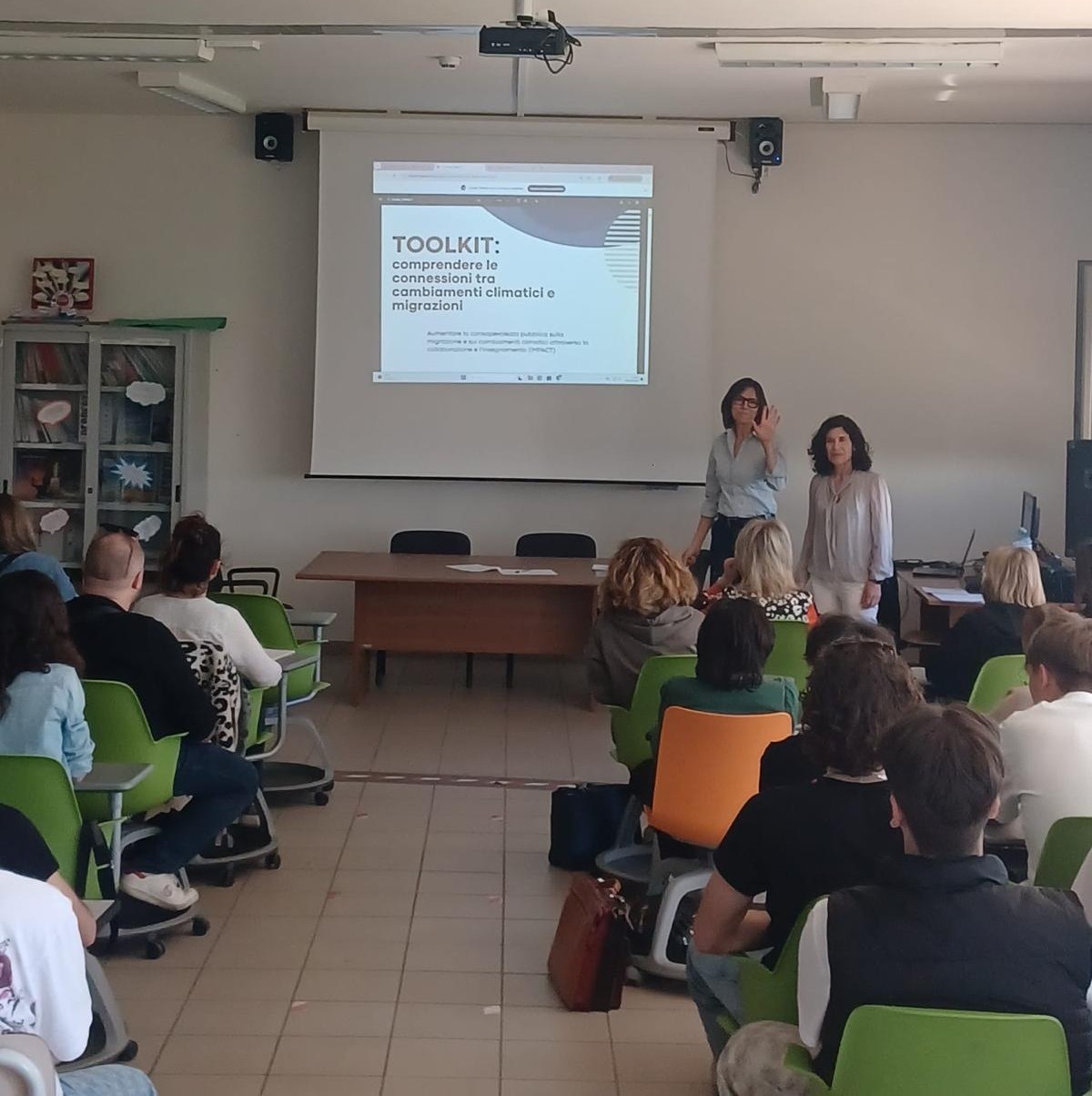
The participants were then introduced to the project's key outputs: a 100-page scientific publication, which will be published on the African Portal and is already available in several languages on the project website, and the Teacher Toolkit, a practical guide designed to support educators in implementing classroom activities (https://impact-erasmus.eu/).
The Toolkit, also available in multiple languages, is divided into several sections. It includes an introductory part aimed at presenting the topic and the educational philosophy underpinning the activities, as well as a practical section containing six classroom activities complete with printable and editable materials ready to be used with students.
The teachers then presented three particularly effective experiential workshops, demonstrating how the activities proposed in the IMPACT Toolkit can be implemented in practice.
The first activity was a role-play exercise in which participants adopted the perspectives of people experiencing migration and displacement. Through empathy and perspective-taking, students are encouraged to understand the different viewpoints, needs, and emotional complexities faced by those who are forced to leave their homes and communities.
The second activity introduced was Photovoice, a participatory methodology that uses photography and visual storytelling to humanise the phenomenon of climate-induced migration. Through images and narratives, students reflect on the human experiences connected to mobility and environmental change, developing awareness and critical thinking skills. The activity is further enhanced by final reflective tasks based on Thinking Routines methodologies.
Finally, the “Climate Domino”. This activity demonstrates the chain reactions generated by climatic, economic, and social events. Participants discover how a single phenomenon can trigger multiple interconnected consequences, highlighting the complexity of the relationships between the environment, society, and migration.
All three activities convey a fundamental message: environmental disruption can undermine the stability of entire communities, making migration a necessary choice for many people. For this reason, it is essential to address these issues within educational settings, helping young people develop empathy, awareness, and systems thinking skills.
We would like to express our sincere gratitude to Silvia Torresi and Arianna Smorlesi for sharing their expertise and the methodologies they have acquired with the teaching staff, and to all the IMPACT project partners for involving our Institute in such a meaningful and enriching educational experience.