
Between Climate and Migration: The Results of the Erasmus IMPACT Project
On May 7th, an engaging online seminar dedicated to the Erasmus+ IMPACT project took place. This initiative aims to build a bridge between scientific awareness and civic engagement (Visit the website: https://impact-erasmus.eu/)
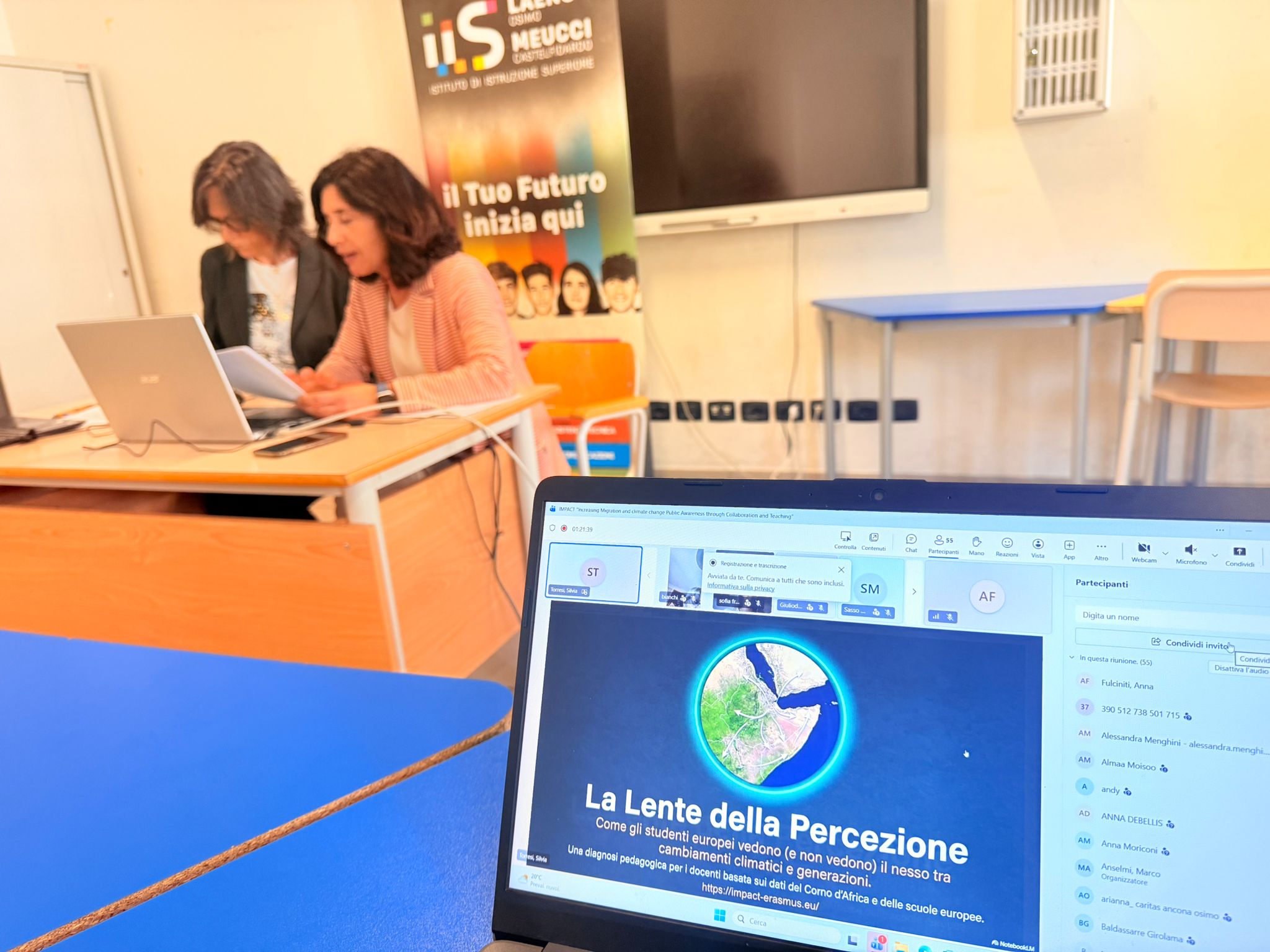
The meeting offered a multidisciplinary overview, starting from the data collected through a questionnaire administered to students in the Marche region and expanding to major migration routes and the environmental impact of our consumption habits.
The Voice of Students: Data analysis by Professor Silvia Torresi
The seminar opened with a presentation by Professor Torresi, who illustrated the results of a survey conducted on a sample of 300 students aged between 14 and 19 from various upper secondary schools in the provinces of Ancona and Macerata. The research is part of the broader European Erasmus+ project involving several international partners, including Belgium, Spain, Greece, and Ethiopia.
Analyzing young people’s perceptions of issues such as climate change and migration is not merely a statistical exercise, but a strategic necessity. The key findings included:
- The need for alignment: Educational programmes must respond to students’ sensitivities in order to transform passive information into active citizenship.
- Target group: Although the sample was broad, the majority of responses came from the intermediate age group, selected as the target of the survey because the school years represent a stage of growth characterised by strong receptiveness.
- Objective: Bridging the gap between theoretical knowledge and genuine civic engagement towards sustainability.
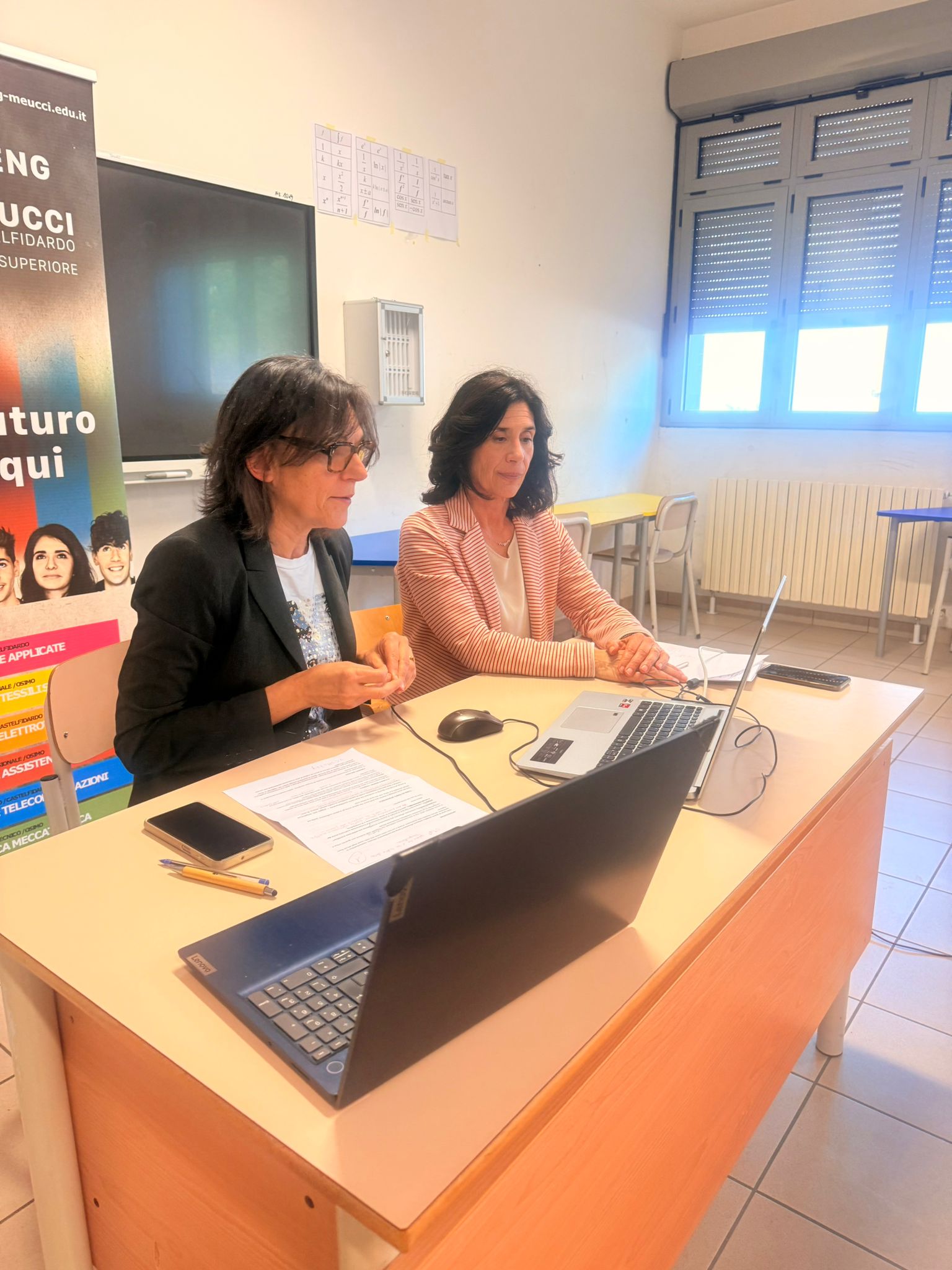
Climate changes: natural and anthropic causes by Professor Smorlesi
Shifting the focus to scientific rigor, Professor Smorlesi explored the issue of climate change in depth. Her presentation clarified the distinction between natural and anthropogenic causes of climate change: while historical cycles and geophysical phenomena have always influenced the Earth’s climate, the decisive impact of human activities has accelerated global warming processes at an unprecedented rate in the planet’s history.
The analysis highlighted how the effects of global warming on our climate are no longer future projections, but already tangible realities requiring a deep understanding of atmospheric and environmental dynamics.
Humanity and Consumption: Dr Burdo’s Contribution
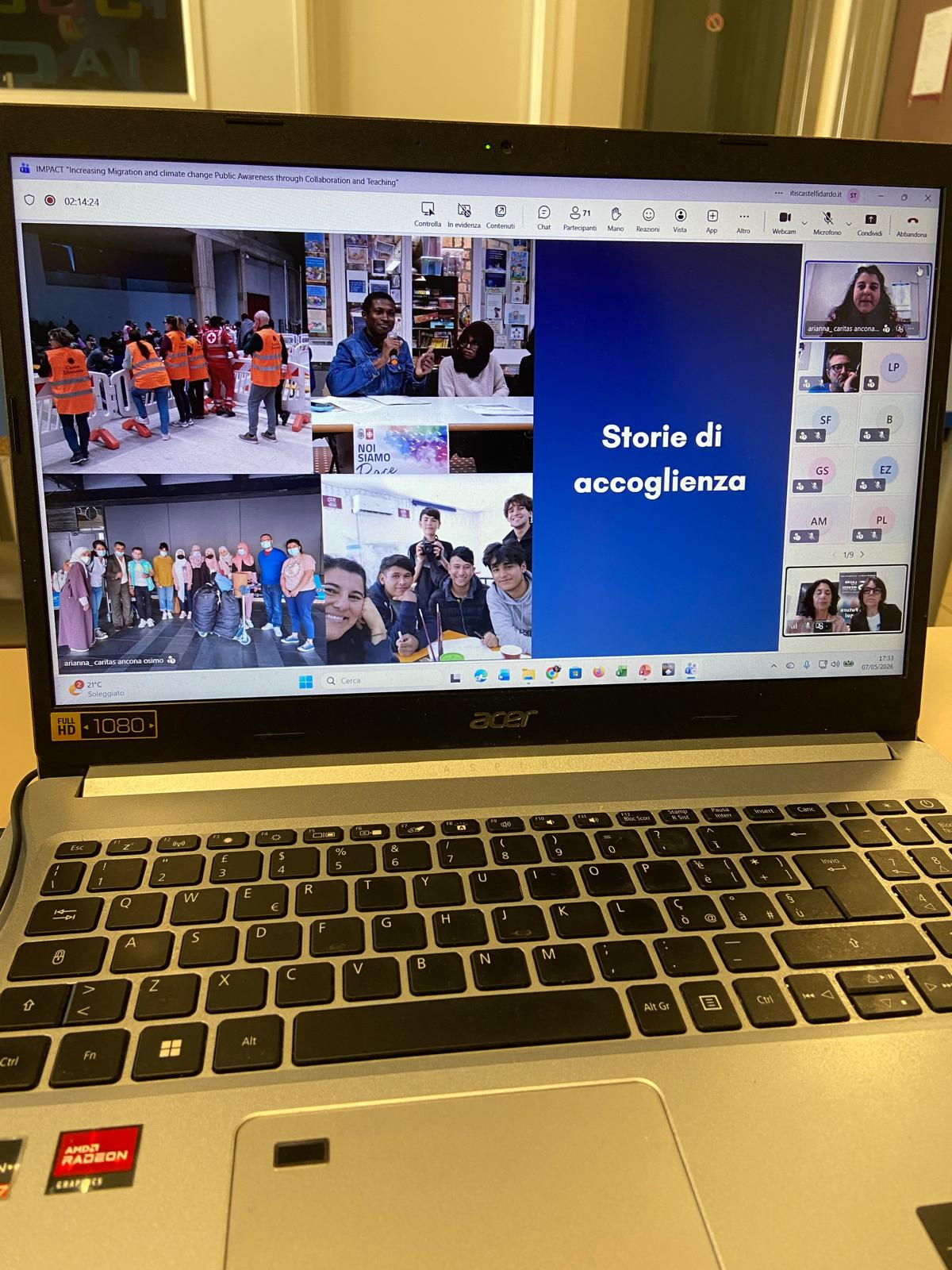
Finally, attention turned to field experience through the testimony of Dr Burdo, an operator from the Caritas Diocese of Ancona-Osimo, who intertwined stories of reception and hospitality with criticism of the current development model.
She shared moving accounts of migrant arrivals and reception activities at the port of Ancona. Particular attention was also given to the “university corridors” programme, a virtuous example of legal migration pathways. This project offers a concrete opportunity to provide many young people with a dignified future, allowing them to continue their studies in Italy far from the dangers posed by human traffickers.
The second part of her speech focused on the paradox of Fast Fashion, a phenomenon typical of our economic model that worsens the conditions of countries most affected by climate change.
A particularly thought-provoking moment concerned Kenya and the destination of our used clothes. The Fast Fashion phenomenon was examined through a direct question: where do the clothes we discard end up? Often, these garments flood African markets, destroying local economies, or end up in open-air landfills, highlighting the toxic link between Western consumerism and environmental disaster in the Global South.
The IMPACT project demonstrates that schools should not merely provide information, but should also connect key concepts such as climate data, consumer choices, and the lives of migrants.
This seminar reaffirmed that educating aware and responsible citizens requires a systemic approach, where science, statistics, and empathy work together to build a more sustainable and just future.