
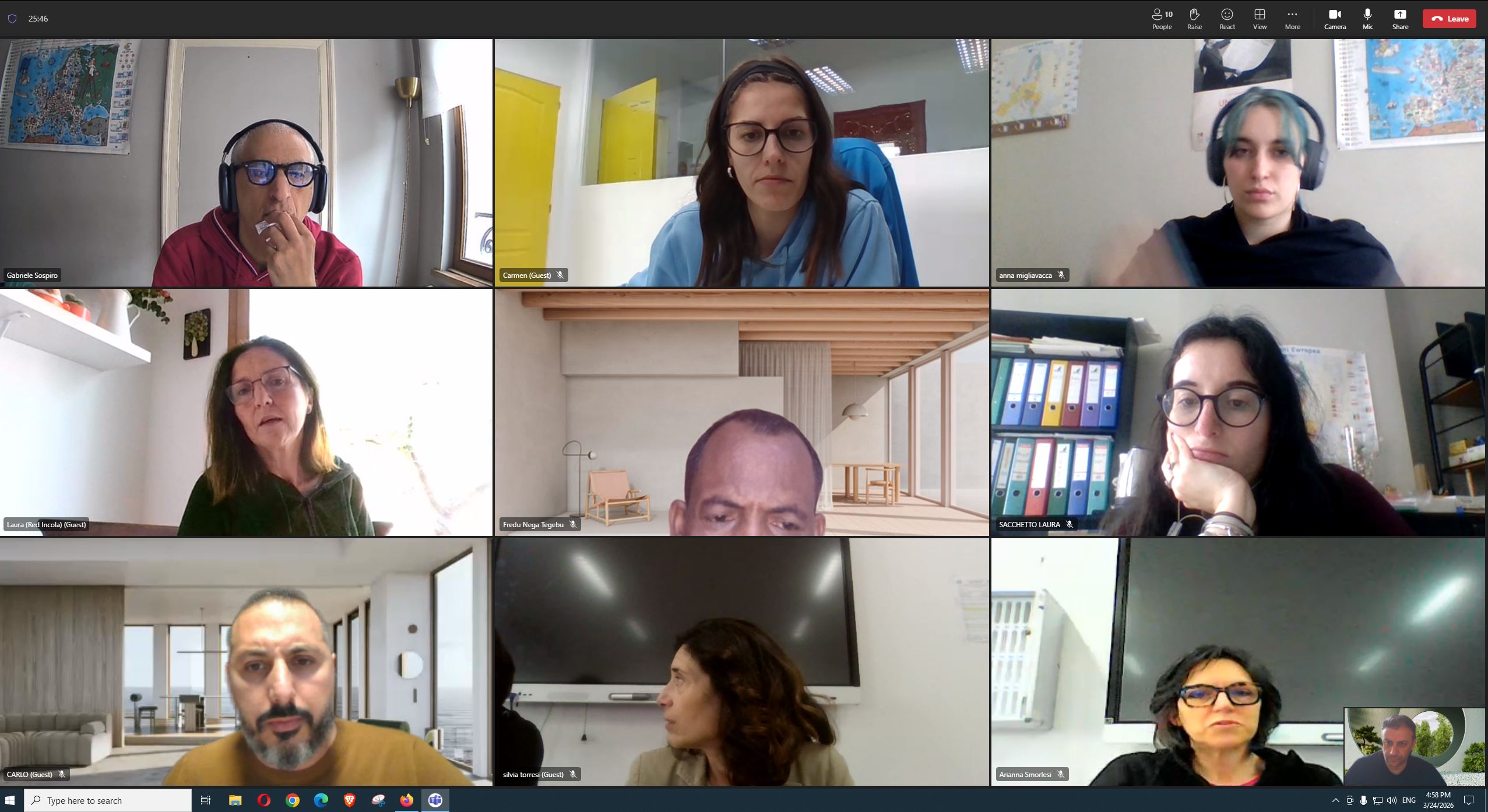
The online meeting of the IMPACT project, held on 24 March 2026 via Microsoft Teams, brought together representatives from all partner institutions to review progress, share experiences from recent activities, and plan the next steps of the project. Overall, the meeting reflected a high level of engagement and satisfaction among partners, as well as strong progress in dissemination and implementation.
A major part of the discussion focused on the debrief of recently completed activities. The Greek team presented the results of their national webinar, which was considered highly successful. With around 200 registrations and consistent attendance of 120–130 participants throughout the three-hour session, the event significantly exceeded its target. The majority of participants were teachers, and feedback indicated very high satisfaction levels, with most attendees reporting that they felt well informed about the connection between climate change and migration. The presentations, especially those related to the educational toolkit, were particularly well received. However, it was noted that the duration of the webinar may have been slightly too long, and suggestions were made to shorten future sessions and reduce the number of presentations. The importance of extensive promotion was also emphasized as a key factor in achieving high participation.
The Spanish team also shared insights from their local face-to-face workshop, which involved 43 participants, mainly teachers. The session was highly interactive, using digital tools and gamified approaches to engage participants. Rather than implementing full-length toolkit activities, the team chose to focus on motivating teachers to explore the materials independently. This approach proved effective, as reflected in the very high satisfaction rates. The discussion highlighted that the format and timing of activities should consider participant energy levels and available time, particularly when events take place after working hours.
Another important topic concerned the project publication. Some improvements were suggested for the cover page, particularly the inclusion of authors’ names and organizational affiliations. Responsibilities were assigned to finalize these updates and upload the corrected version. Translation progress was also discussed, with the Spanish team having completed their work and the Greek team undertaking a full translation. Concerns were raised about meeting deadlines, but the proactive approach taken by the Greek team was noted positively.
Looking ahead, partners discussed upcoming activities. The Greek team is planning a local workshop in late April or early May, designed as a hands-on “experimental laboratory” where participants will actively engage with selected toolkit activities. Meanwhile, the Italian and Spanish teams are preparing their own webinars for the same period. All partners are also organizing final dissemination events, and the idea of creating a video compilation of project activities across countries was warmly received as a way to showcase the project’s impact.
Dissemination efforts and documentation requirements were also reviewed in detail. The project has already achieved or is close to achieving its dissemination targets, with significant increases in website traffic and engagement. However, some partners still need to upload missing dissemination links as evidence of their activities. Clear guidelines were reiterated regarding the types of documentation required, including social media posts, participant lists, photos, evaluation forms, and screenshots. The Greek team’s structured approach to organizing materials was highlighted as a good practice for others to follow.
The meeting concluded on a positive note, with partners expressing appreciation for the collaboration and achievements of the project despite the demanding workload. There was a strong sense of shared commitment and motivation across the consortium. The next meeting was scheduled for 21 April 2026, where further updates and progress will be reviewed.