
Migration and climate change: The IMPACT project takes stage at Viceversa – The Science Festival
The IMPACT project was featured at “Viceversa – The Science Festival”, a two-day event (13th-14th June 2026) organized by the University of Camerino (Unicam) and dedicated to science communication. Through talks, performances, book presentations and interactive activities, the initiative aims to bring the public closer to the world of research and higher education in an engaging and accessible way, fostering dialogue among researchers, students, teachers and citizens.
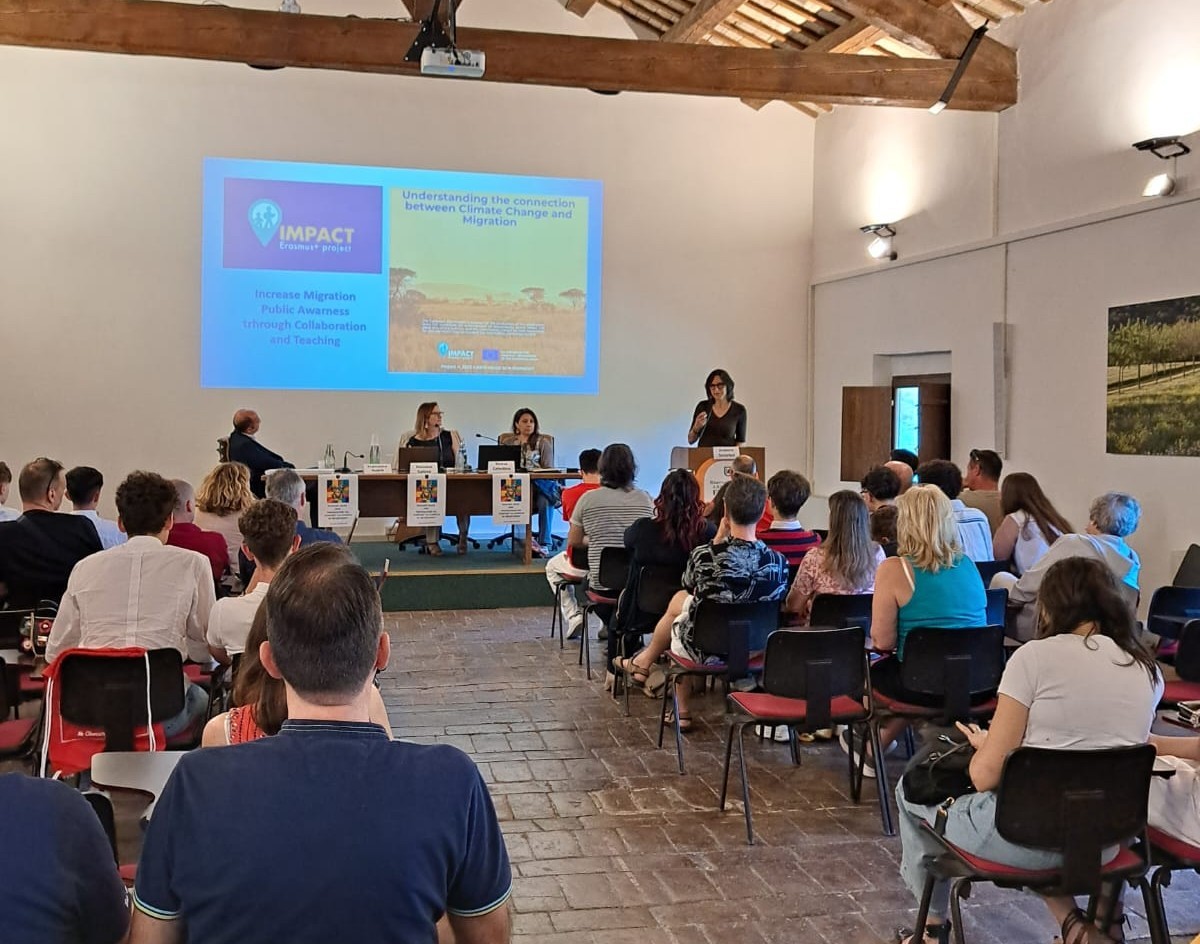
IMPACT was presented during the Teacher Talks, a space dedicated to upper secondary school teachers, who had the opportunity to share projects, educational pathways and research experiences developed at school. This event represented an important opportunity to highlight the role of schools in promoting scientific culture and fostering active and informed citizenship.
Prof. Arianna Smorlesi presented the work carried out within the Erasmus+ project “IMPACT”, describing the study and research activities conducted in collaboration with the international partners involved. The project culminated in the development of educational materials and teaching resources designed to address the relationship between migration and climate change in school settings.
During the presentation, some of the key findings emerging from the research and pilot activities carried out by partners from Italy, Belgium, Greece, Spain, and Ethiopia were shared. Particular attention was given to the toolkit (visit https://impact-erasmus.eu/) developed by the project partners, which promotes participatory methodologies aimed at engaging students actively in the analysis of complex and multidimensional issues. These approaches encourage learners to reflect on the social, economic, and environmental consequences of climate change.

The presentation also highlighted the value of international cooperation fostered through Erasmus+ programmes, which enable the exchange of educational best practices and the creation of collaborative networks among schools, universities and organizations across Europe. Thanks to this cooperation, innovative tools were developed to address highly relevant contemporary issues using an approach that is both scientifically rigorous and accessible to students.
In her talk, Prof. Smorlesi emphasized how science can effectively interact with global citizenship education and how understanding climate change is essential for interpreting a complex phenomenon with profound social and human implications. Environmentally driven migration is, in fact, one of the major challenges of our time and requires an informed, evidence-based understanding that goes beyond oversimplifications and stereotypes.
Promoting this awareness means contributing to the education of informed and responsible citizens who are equipped to face the major challenges of the present and the future with critical thinking, social sensitivity, and a commitment to the principles of sustainability and global solidarity.
